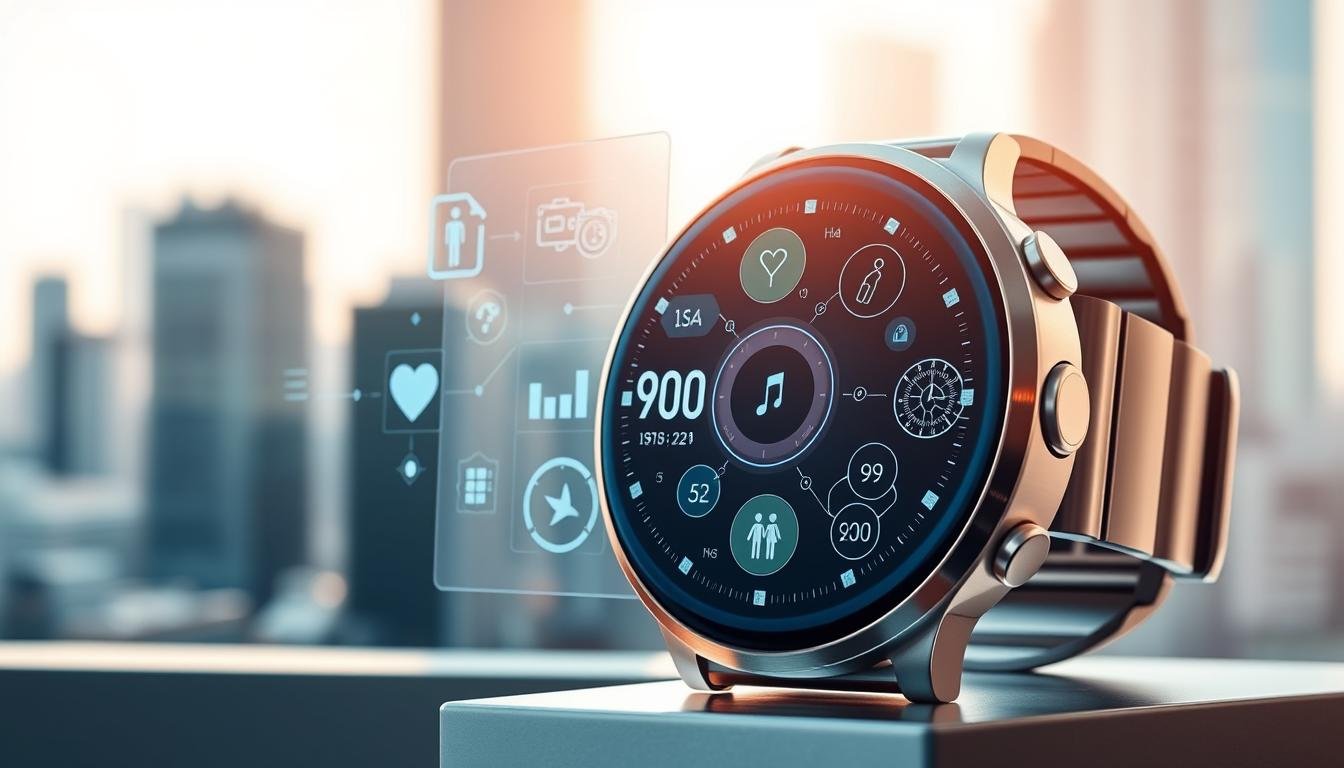
In today’s fast-paced world, keeping up with health and wellness is tough. Luckily, smartwatches have made it easier to track and manage our health.
Smartwatches come with many health monitoring features. They track heart rate, sleep, exercise, and nutrition. These devices give us valuable insights into our daily habits and wellness. This helps us make better choices about our lifestyle.
By using wellness tracking and fitness monitoring, we can improve our health. In this article, we’ll look at the smartwatch health features that help us live healthier and more balanced lives.
Key Takeaways
- Smartwatches offer a range of health monitoring features.
- Wellness tracking and fitness monitoring are key benefits.
- These devices provide insights into daily habits and overall wellness.
- Users can make informed decisions about their lifestyle.
- Smartwatches enable a proactive approach to health improvement.
The Evolution of Smartwatches as Health Companions
Smartwatches have changed a lot over the years. They’ve moved from simple fitness trackers to advanced health monitoring tools. This change came from better sensor technology and our need for personal health data.
From Simple Step Counters to Health Monitoring Devices
The first smartwatches mainly tracked fitness. They could count steps and track distance.
Early Fitness Tracker Capabilities
At first, smartwatches could only track basic fitness. They counted steps and estimated calories burned. These features helped users understand their daily activity.
Modern Health Sensor Integration
Now, smartwatches have many health sensors. They include heart rate monitors, GPS, and even ECG and blood oxygen sensors. These features give users detailed health insights.
The Growing Integration with Healthcare Systems
Smartwatches are now linked to healthcare systems more than ever. They have FDA-cleared medical features and options for telehealth.
FDA-Cleared Medical Features
Some smartwatches can detect health issues like atrial fibrillation. They provide users with important health info.
Telehealth Connectivity Options
Telehealth lets users share health data with doctors. This makes remote consultations and better care possible.
| Feature | Early Smartwatches | Modern Smartwatches |
|---|---|---|
| Fitness Tracking | Basic step counting | Advanced activity recognition, GPS tracking |
| Health Monitoring | Limited to fitness metrics | Includes heart rate, ECG, blood oxygen monitoring |
| Healthcare Integration | No direct integration | FDA-cleared features, telehealth connectivity |
Essential Fitness Tracking Features
Smartwatches have changed how we keep track of our health. They let us monitor our daily activities, set fitness goals, and see how we’re doing over time.
Step Counting and Distance Tracking
Step counting and tracking distance are key in fitness tracking. Today’s smartwatches are much better at these tasks.
Accuracy Improvements in Modern Devices
Modern smartwatches use new algorithms and sensors to get things right. For example, they use GPS and accelerometers to track steps and distance better.
GPS vs. Accelerometer-Based Tracking
GPS tracking is great for outdoor activities like running or biking. It gives precise distance. But, for indoor activities or when GPS is weak, accelerometer tracking is better.
| Feature | GPS-Based Tracking | Accelerometer-Based Tracking |
|---|---|---|
| Accuracy | High for outdoor activities | Variable, depends on activity type |
| Use Case | Running, cycling, hiking | Walking, indoor workouts |
Calorie Burn Estimation
Calorie burn estimation is a key feature. It shows how much energy we use. Smartwatches look at heart rate and activity type to guess calories burned.
Activity Recognition Technology
Activity recognition technology lets smartwatches automatically track workouts.
Automatic Workout Detection
This feature is great for those who forget to log workouts. It can spot activities like running, swimming, or weightlifting.
Heart Health Monitoring Capabilities
Smartwatches have become key tools for heart health monitoring. They offer features that help users understand their heart health better. This empowers them to take charge of their well-being.
Continuous Heart Rate Tracking
Modern smartwatches track heart rate continuously. This is great for athletes and anyone who exercises regularly. It lets them see their heart rate in real-time.
Resting Heart Rate Trends
Resting heart rate trends show how well your heart is doing. A lower rate means better fitness. It’s a key indicator of heart health.
Zone-Based Training Benefits
Zone-based training helps users get the most out of their workouts. It keeps them in the right heart rate zone. This makes their training more effective.
ECG and Arrhythmia Detection
ECG monitoring and arrhythmia detection are advanced features. They help spot irregular heart rhythms. This can signal health issues that need attention.
Blood Pressure Monitoring Advancements
Blood pressure monitoring has improved a lot. Cuffless BP technology makes tracking easier and more comfortable. It’s a big step forward in health tracking.
Cuffless BP Technology Development
Cuffless BP technology measures blood pressure without a cuff. It’s a more convenient and user-friendly way to monitor blood pressure.
| Feature | Description | Benefit |
|---|---|---|
| Continuous Heart Rate Tracking | Monitors heart rate in real-time | Optimizes workouts and recovery |
| ECG Monitoring | Records heart’s electrical activity | Detects irregular heart rhythms |
| Cuffless BP Technology | Measures blood pressure without a cuff | Convenient and comfortable monitoring |
These features together help users manage their heart health better. They make it easier to make informed choices about staying healthy.
Sleep Tracking and Analysis
Smartwatches now track sleep in detail, giving a full view of sleep health. This change helps in more personal health monitoring.
Sleep Stage Monitoring
Monitoring sleep stages is key. It tracks REM, deep, and light sleep.
REM, Deep, and Light Sleep Tracking
Smartwatches now track different sleep stages. REM sleep helps the mind, while deep sleep aids the body.
Sleep Quality Scores and Insights
Many smartwatches give a sleep quality score. This score quickly shows sleep health. It also offers detailed insights to improve sleep.
Integration with Sleep Improvement Programs
Some smartwatches link with sleep improvement programs. These programs give advice to better sleep.
Smart Alarm and Wake-Up Optimization
A key feature is the smart alarm. It wakes you up when you’re lightly sleeping. This makes waking up better.
| Feature | Description | Benefit |
|---|---|---|
| Sleep Stage Monitoring | Tracks REM, deep, and light sleep | Understand sleep patterns |
| Sleep Quality Scores | Provides a score for sleep quality | Quick overview of sleep health |
| Sleep Improvement Programs | Offers strategies to improve sleep | Enhanced sleep quality over time |
| Smart Alarm | Wakes user during light sleep phase | Improved wake-up experience |
Smartwatch Features Improving Your Health Through Stress Management
Stress management is key to good health, and smartwatches are leading the way. They offer new ways to track and lower stress levels.
Stress Level Detection and Alerts
Today’s smartwatches can spot stress through different signs. They look at heart rate, skin conductance, and more. These signs tell when you’re stressed.
Physiological Markers of Stress
Heart Rate Variability (HRV) is a main stress indicator. A low HRV means you’re stressed. Smartwatches with ECG sensors can track HRV and warn you of high stress.
Guided Breathing Exercises
Many smartwatches have guided breathing exercises. These help you breathe slowly and deeply. They calm your mind and body, reducing stress.
HRV Analysis for Stress Assessment
HRV analysis gives deep insights into your stress levels. It helps you understand your body’s stress response. This knowledge lets you find ways to lower stress and boost well-being.
Understanding Heart Rate Variability Benefits
Knowing HRV’s benefits helps you use this feature well. It lets you see how your body reacts to stress. This knowledge helps you find ways to reduce stress’s impact.
Some key benefits of HRV analysis include:
- Early detection of stress
- Personalized insights into your physiological responses
- Guidance on managing stress through lifestyle changes
By using these smartwatch features, you can actively manage stress. This leads to better health and wellness overall.
Blood Oxygen and Respiratory Monitoring
Blood oxygen and respiratory monitoring are now key in smartwatches. They give users insights into their health and wellness.
SpO2 Sensors and Their Functionality
SpO2 sensors check blood oxygen levels. They show how well oxygen is being sent to the body. Continuous monitoring and spot checks are used by these sensors.
Spot Checks vs. Continuous Monitoring
Spot checks give a snapshot of blood oxygen levels at a moment. Continuous monitoring shows real-time data over time. Continuous monitoring is great for athletes or those with health issues.
Respiratory Rate Tracking
Respiratory rate tracking counts breaths per minute. It offers insights into respiratory health. This is useful during exercise or for those with respiratory conditions.
Altitude Acclimation Features
Altitude acclimation features help adjust to higher elevations. Real-time alerts and acclimation plans are given to help adapt.
Benefits for Hikers and Mountain Athletes
- Real-time altitude data
- Personalized acclimation plans
- Alerts for potential altitude sickness
Women’s Health Features
Smartwatches now focus more on women’s health. They offer many features to support different health needs. These features aim to give a more personalized experience for women.
Menstrual Cycle Tracking
One important feature is tracking menstrual cycles. It lets women monitor their cycles and predict when their next period will be. This feature is made better with:
Symptom Logging and Pattern Recognition
Users can log their symptoms during their cycle. This helps spot patterns and links between symptoms and cycle phases.
Fertility Window Predictions
Another great feature is predicting the fertility window. It uses cycle data to guess when a woman is most fertile. This is very helpful for those trying to get pregnant.
Pregnancy-Related Health Monitoring
Pregnant women can also use smartwatches for health monitoring. They track important health metrics during pregnancy.
Specialized Apps and Integrations
There are apps and integrations for pregnant women too. They offer pregnancy tracking and prenatal care resources.
Key Benefits:
- Personalized health insights
- Improved cycle and fertility tracking
- Enhanced support during pregnancy
As smartwatches get better, they will likely help more with women’s health. They will offer even more tailored features and insights.
Advanced Workout and Athletic Performance Features
Smartwatches have become key tools for athletes. They offer advanced features to boost workout performance. These features give valuable insights to athletes.
Sport-Specific Tracking Modes
Modern smartwatches have sport-specific tracking modes. They track various athletic activities like running and swimming.
Running Dynamics and Form Analysis
Runners get insights into their running form. This includes cadence, stride length, and ground contact time. It helps them improve their technique and performance.
Swimming and Water Sports Metrics
Swimmers and water sports enthusiasts get important metrics. These include stroke count, distance per stroke, and water resistance. These metrics help optimize swimming techniques and improve performance.
Training Load and Recovery Metrics
Understanding training load and recovery is key for athletes. Smartwatches track training load. This helps athletes manage recovery and stay at their best.
Performance Analytics and Improvement Suggestions
Advanced smartwatches offer performance analytics. They show an athlete’s progress over time. These analytics come with suggestions to improve performance.
AI-Powered Coaching Capabilities
AI-powered coaching in smartwatches is a big step forward. It gives personalized coaching advice. This helps athletes set realistic goals and create effective training plans.
| Feature | Description | Benefit |
|---|---|---|
| Sport-Specific Tracking | Detailed tracking for various sports | Enhanced performance monitoring |
| Running Dynamics | Analysis of running form and cadence | Improved running technique |
| AI-Powered Coaching | Personalized coaching advice | Tailored training plans |
Health Data Security and Integration
Health-focused smartwatches are becoming more common. But, they raise big concerns about data security and privacy. These devices collect a lot of personal health info. So, data encryption and privacy settings are key to keep user data safe.
Protecting Your Sensitive Health Information
Smartwatch makers use many ways to keep health data safe. Encryption is a big tool to protect data. Users can also change privacy settings to control who sees their data.
Encryption and Privacy Settings
Encryption makes data unreadable to those who shouldn’t see it. Privacy settings let users decide who can see their data. This way, only trusted apps and services can access it.
Sharing Data with Healthcare Providers
Smartwatches can send health data to doctors, improving care. This sharing helps doctors make better diagnoses and treatment plans. It’s done through healthcare provider data sharing protocols.
Integration with Health Apps and Services
Smartwatches work with health apps and services like Apple Health and Google Fit. This lets users see all their health data in one spot. It gives a complete picture of their health.
Apple Health, Google Fit, and Other Ecosystems
Platforms like Apple Health and Google Fit help users manage their health data. Smartwatches that work with these services make tracking health easy. Users can see all their health metrics in one place.
Mental Wellness and Mindfulness Features
Smartwatches now have features for better mental health. They help users live a balanced life. They track and guide through practices for mental well-being.
Meditation Guidance and Tracking
Many smartwatches offer meditation guidance. They provide structured sessions for relaxation and focus. These sessions can be set for different times and goals, making meditation easier to fit into daily life.
Breathing Visualization Tools
Some smartwatches have breathing visualization tools. They guide users through breathing exercises to reduce stress and improve mindfulness. These tools often go with meditation sessions, making them more effective.
Mood Logging and Pattern Recognition
Mood logging lets users track their emotions over time. It helps find triggers and manage mental health better.
Cognitive Performance Monitoring
Certain smartwatches track cognitive performance. They check focus and productivity. This helps users understand how to improve their mental function.
Focus and Productivity Tracking
Focus and productivity tracking features show how well users concentrate and manage time. By analyzing these, users can improve their daily schedules and reduce distractions.
These mental wellness and mindfulness features in smartwatches are a big step in wearable technology. They offer a holistic approach to health and well-being.
Conclusion: Maximizing Health Benefits from Your Smartwatch
To get the most out of your smartwatch, use its health features well. Features like heart rate monitoring, sleep tracking, and stress management offer valuable health insights. They help you understand your overall health and wellness better.
Effective wellness tracking means using these features often and changing your habits based on the data. For example, sleep stage monitoring can show you how to improve your sleep. This way, you can make your sleep better.
By using your smartwatch’s health features and making smart choices, you can boost your health. Whether it’s through breathing exercises or tracking your activity, your smartwatch is a great tool for better health and wellness.
FAQ
What are the key health monitoring features available in modern smartwatches?
Modern smartwatches track your heart rate all the time. They also detect ECG and arrhythmia. You can monitor blood pressure and check your blood oxygen levels with SpO2 sensors.
How do smartwatches track sleep, and what insights can they provide?
Smartwatches track sleep by monitoring different stages. This includes REM, deep, and light sleep. They give sleep quality scores and insights, helping you understand your sleep and how to improve it.
Can smartwatches help with stress management, and if so, how?
Yes, smartwatches can help manage stress. They detect stress levels and alert you. They also offer guided breathing exercises and HRV analysis for stress assessment.
Are smartwatches suitable for tracking athletic performance, and what features do they offer for athletes?
Smartwatches are great for tracking athletic performance. They have sport-specific tracking modes and training load metrics. They also provide recovery metrics and performance analytics with suggestions for improvement.
How do smartwatches protect user health data, and can they integrate with healthcare providers?
Smartwatches protect health data with encryption and privacy settings. They can also connect with healthcare providers and health apps. This allows for secure data sharing, like with Apple Health and Google Fit.
What women’s health features are available in smartwatches?
Smartwatches have features for women’s health, like tracking menstrual cycles and predicting fertility windows. They also monitor pregnancy-related health. There are specialized apps and integrations for pregnant women.
Can smartwatches monitor respiratory rate, and what is the benefit of this feature?
Yes, smartwatches can track respiratory rate. This gives insights into respiratory health. It helps identify issues, especially during exercise or at high altitudes.
How do smartwatches support mental wellness and mindfulness practices?
Smartwatches support mental wellness with guided meditation and mood logging. They also monitor cognitive performance. This helps manage stress and improve mental well-being.