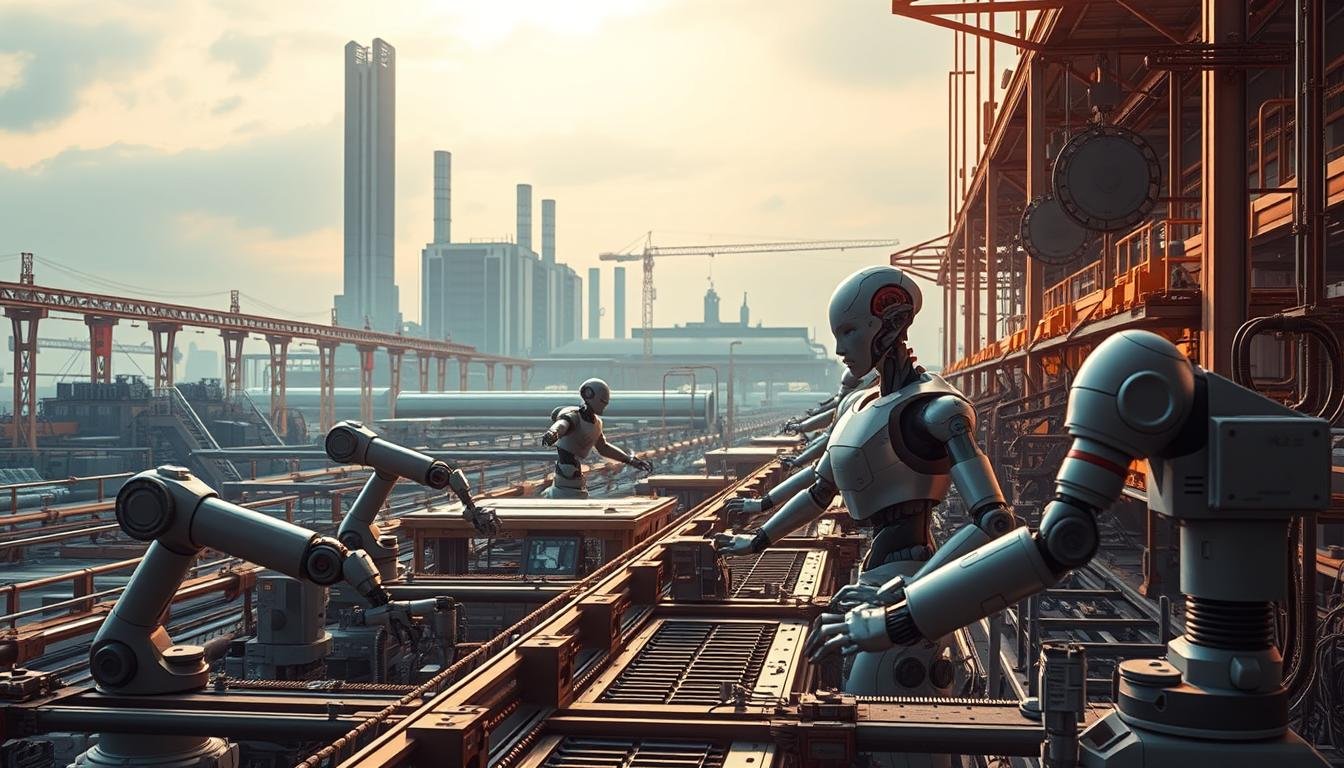
The rise of industrial robotics is changing how businesses work in many fields. New tech is making robotic transformation big in manufacturing, healthcare, and logistics.
Automation and robotics are making things better and more competitive. As things change, knowing about industrial robotics is key for businesses to lead.
Key Takeaways
- The significance of industrial robotics in modern industries.
- The impact of robotic transformation on various sectors.
- The benefits of adopting automation and robotics.
- The importance of understanding industrial robotics for business success.
- The role of technological advancements in driving robotic transformation.
The Evolution of Industrial Robotics
The world of industrial robotics has changed a lot in recent years. It has moved from simple machines to smart, complex systems. This change came from better technology in design, control, and sensors.
From Factory Automation to Intelligent Systems
In the beginning, robots were mainly used for simple tasks like assembly and moving things. Now, robots are getting smarter, thanks to AI and machine learning. They can do more complex tasks and even make decisions. An expert says, “The next step for robots is to learn and adapt like humans do.”
“The future of manufacturing is not just about automating tasks, but about creating intelligent systems that can optimize production processes.”
Today’s robots are also more flexible and can work with people. This makes production faster and more efficient.
Key Adoption Statistics and Growth Trends
More companies are using robots to boost their work. The global market for industrial robots is growing fast, with a 10% annual increase expected for the next five years.
| Year | Industrial Robot Sales (Units) | Growth Rate (%) |
|---|---|---|
| 2020 | 250,000 | 5% |
| 2021 | 275,000 | 10% |
| 2022 | 300,000 | 9% |
The trend of using more robots is likely to keep growing. This is because technology keeps getting better and more industries want to automate.
How Robots Are Shaping Industries Today
Robots are changing how businesses work, moving beyond simple tasks. They are now used in many areas, making things more efficient and productive.
Beyond Automation: Augmenting Human Capabilities
Robots do more than just automate tasks. They help humans do better work. Collaborative robots, or cobots, work with people to make things safer and more efficient.
These robots have advanced sensors and AI. They can handle complex tasks that need precision and flexibility.
In manufacturing, cobots help with assembly, checking, and packaging. They work with humans to boost production and lower injury risks.
The Fourth Industrial Revolution in Action
The Fourth Industrial Revolution combines digital, physical, and biological systems. Robotics is key to this, making factories and supply chains smarter and more efficient.
Technologies like AI, machine learning, and IoT are making robots smarter. This allows for better automation and data analysis in real-time. It’s changing industries by making maintenance predictive, improving product quality, and cutting costs.
Major Industries Experiencing Robotic Transformation
Many big industries are changing a lot because of robotics technology. They want to work better, be more precise, and make more. The main areas changing are manufacturing, healthcare, agriculture, and logistics.
Manufacturing: Precision, Speed, and Consistency
In manufacturing, robots are making things better. They help with tasks like putting parts together, welding, and moving stuff around. The good things they bring are:
- More work done
- Better quality products
- Less money spent on workers
Healthcare: Surgical Precision and Patient Care
The healthcare world is using robots for surgical precision and patient care. These systems help with small, accurate surgeries. Robots also help with patient care, like:
- Helping with recovery
- Being friends to patients
Agriculture: From Field Robots to Automated Harvesting
Agriculture is also changing thanks to robots. They help from field robots to automated harvesting. Robots assist with:
- Watching over crops
- Doing harvesting work
- Making farming more efficient
Logistics: Warehouse Automation and Delivery Solutions
In logistics, robots are making a big difference. They help with warehouse automation and delivery solutions. Robots are good for:
- Picking and packing orders
- Keeping track of stock
- Automating delivery
Robots are changing these industries a lot. They’re making things more automated and efficient. As robots get better, we’ll see even more cool uses in different fields.
Types of Industrial Robots and Their Applications
The world of industrial robotics is filled with different types of robots. From collaborative robots to autonomous mobile robots, each has its own purpose. They help make industries more efficient and productive through robotics applications and automation.
Collaborative Robots: Working Alongside Humans
Collaborative robots, or cobots, work with humans to boost productivity. They have sensors and safety features for safe operation near people. This makes them perfect for tasks needing both human insight and robotic accuracy.
Autonomous Mobile Robots: Intelligence in Motion
Autonomous Mobile Robots (AMRs) move around using advanced sensors and mapping tech. They help in logistics and warehouse management by carrying goods. This improves efficiency and cuts down on labor costs.
Articulated Robotic Arms: Versatility in Action
Articulated robotic arms are versatile and common in manufacturing. They handle tasks like welding, assembly, and material handling. Their design allows for a wide range of motion, fitting complex operations.
Industry-Specific Specialized Robots
Different industries have robots tailored to their needs. In healthcare, robots assist in surgeries and care for patients. In agriculture, they help with harvesting and monitoring crops.
Economic and Workforce Implications
Industrial robots are changing the economy and how we work. As companies use robots, they see big changes in how they work and who they need to hire.
The Changing Employment Landscape
Robots are changing jobs. While they might take some jobs, they also create new ones. For example, jobs in robot maintenance and programming are becoming more common. A report by the International Federation of Robotics says the robotics market will keep growing, leading to new job types.
New Skills for the Robotic Age
As robots get smarter, workers need new skills. Training in robotics, AI, and data analysis is key. It helps workers keep up with the robotic age.
Economic Benefits and Competitive Advantages
Robots bring big economic wins. They help companies work better, save money, and make better products. Companies that use robots can stand out in their markets.
| Economic Impact | Description | Benefit |
|---|---|---|
| Productivity Increase | Robots work around the clock without breaks | Higher output with less downtime |
| Labor Cost Reduction | Automation of repetitive tasks | Reduced labor expenses |
| Quality Improvement | Precision and consistency in manufacturing | Enhanced product quality |
Future Trends in Industrial Robotics
Industrial robotics is on the verge of big changes thanks to new tech. Artificial intelligence (AI) and machine learning (ML) will be key in these changes.
AI and Machine Learning Integration
AI and ML will make robots more independent and flexible. This means they can work better and faster in factories. Predictive maintenance and quality control will see big improvements.
Advanced Sensing and Environmental Awareness
New sensing tech will help robots understand their surroundings better. They’ll get better at seeing and sensing things around them. This will help them do complex tasks more accurately.
Expanding Applications in Emerging Industries
Robots aren’t just for making things anymore. They’re also helping in new areas like renewable energy and biotechnology. This makes things more efficient and cheaper.
| Trend | Description | Impact |
|---|---|---|
| AI and ML Integration | Enhanced autonomy and adaptability | Improved efficiency and flexibility |
| Advanced Sensing | Better environmental awareness | Precision and complex task performance |
| Emerging Industries | Adoption in new sectors | Increased efficiency and reduced costs |
Conclusion: Preparing for a Robot-Enhanced Future
As industries change with robotic transformation, it’s key to understand how automation affects different areas. Robots are making a big difference in manufacturing, healthcare, agriculture, and logistics. They bring better precision, speed, and consistency.
To get ready for a future with more robots, businesses and people need to adjust. They must learn new skills to work with robots and use automation’s economic benefits. As AI and machine learning get better, robots will help humans even more.
By welcoming robotic change and investing in automation, industries can stay ahead. The robotic revolution is growing, and being informed and ready is crucial to fully use its benefits.
FAQ
What is the primary role of robots in industries today?
Robots help humans by improving precision and efficiency. They are used in many fields like manufacturing, healthcare, and logistics.
How are collaborative robots different from traditional industrial robots?
Collaborative robots work with humans to boost productivity. Traditional robots do repetitive tasks and need safety cages.
What are the benefits of using autonomous mobile robots in logistics?
Autonomous mobile robots make logistics more efficient. They reduce labor costs and improve supply chain management.
How is AI and machine learning being integrated into industrial robotics?
AI and machine learning make robots smarter. They learn from experience and get better over time.
What are the economic benefits of adopting industrial robotics?
Using industrial robots can save money and boost productivity. It also helps businesses stay competitive.
How will the increasing use of industrial robots affect the workforce?
Robots might replace some jobs but create new ones. They help humans focus on tasks that need creativity and skill.
What are some of the emerging industries that are adopting robotics?
New fields like agriculture, healthcare, and logistics are using robots. This improves their efficiency and precision.
What is the significance of advanced sensing and environmental awareness in industrial robotics?
Advanced sensing lets robots understand their surroundings better. This helps them adapt and work more safely and efficiently.